
Monash University research reveals faster-drying roads for construction
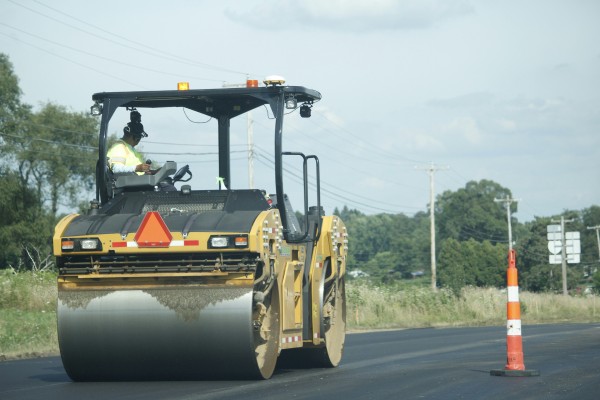
Engineers at Monash University have published research outlining a faster and more reliable way to dry road-base materials, a development that could help reduce weather-related construction delays.
The team, led by Professor Jayantha Kodikara from the university’s Department of Civil and Environmental Engineering, tested a hybrid drying method that combines microwave energy with controlled hot airflow to treat compacted unbound granular materials commonly used in road base layers.
“This work has real potential to reduce costly delays on construction sites. It shows we can take much of the guesswork out of drying road base materials. By combining microwave energy with controlled hot airflow, we’re able to dry the surface layer more quickly and consistently than relying on sunshine alone,” Professor Jayantha says.
The researchers also incorporated machine learning models to predict drying performance based on variables including temperature, airflow speed, airflow angle and time. The models demonstrated strong predictive accuracy, highlighting the potential for data-driven planning tools to support more efficient project scheduling.
Laboratory trials found the hybrid method was more effective at drying surface layers than microwaves alone, offering a viable alternative to traditional solar drying.
“By integrating machine learning into the process, we can start to predict drying performance under different site conditions. That means contractors could better plan their schedules and respond to changing weather, rather than waiting and hoping materials dry in time,” he says.
While drying deeper layers remains an ongoing challenge, the research provides a promising proof of concept for improving reliability and efficiency in road construction, with reduced dependence on favourable weather conditions.