
Getting plumbing insurance right
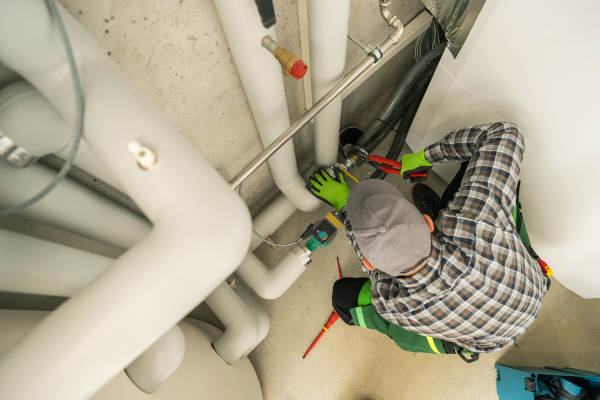
Due to faulty flexi hoses, changing policies and hidden exclusions, plumbers are discovering harsh truths about their insurance cover. Daniel Williamson explains what plumbers need to know before signing their next policy.
Tammy the plumber was wrapping up a repair on the sixth floor of a new apartment building when she heard a sound no tradesperson wants to hear: The hiss of water under pressure. Within mere minutes, a faulty flexi hose bursts, flooding her entire work area and spilling down through the walls to the units below.
By the time the water stopped, several apartments were damaged, and Tammy was (understandably) not in a good mood. But at least she was covered by her $20 million public liability insurance, right? Well, she wasn’t. Tammy was not in a good mood.
In the fine print of her policy, there was a clause that excluded work on buildings taller than three storeys high. It didn’t matter that Tammy was working inside a bathroom, not on the roof. The entire building exceeded the limit, and the exclusion meant the insurer denied the claim.
She faced hundreds of thousands of dollars in damages and the sinking feeling that came with realising her insurance was not worth the paper it was printed on. Tammy was not in a good mood.
Luckily, the story is fictional, but something similar has likely happened to a Tammy-equivalent. Master Plumbers Association of NSW chief executive Nathaniel Smith says cases like this are becoming increasingly common as insurers quietly step back from covering high-rise plumbing work.
“Some of the major insurance companies in Australia have stopped insuring plumbers working over three storeys,” he says.
“They might think they’ve got a $20 million public liability cover, but if a pipe or a crimp blows on the sixth floor and floods the levels below, they’re not insured. That can mean hundreds of thousands, even millions, in damage.”
Master Plumbers is the peak body for the plumbing industry. It provides plumbing membership packages, training and professional development opportunities, apprentices and apprentice hire services.
Nathaniel has been warning plumbers to read their policies carefully and compare insurers before renewing.
“All plumbers, regardless of the size of their business, tend to use their local broker. But some of the terms and conditions they’re signing don’t actually cover them if a catastrophe happens,” he warns.
MGA Insurance specialises in general insurance and provides advice across a broad spectrum of occupations, including plumbing. The company’s account director, Andrew Faber, confirms Nathaniel’s concerns. He has seen insurers tighten their risk criteria in recent years, explaining that the reason why insurers have stopped covering plumbers working over three stories is due to one key issue: Water damage.
“Water damage in high-rise buildings has been one of the biggest issues the plumbing industry has faced,” he says.
“Where a burst pipe in a single-storey home might lead to a $10,000 claim, a similar failure in a high-rise can affect multiple floors and trigger massive losses.”
Essentially, you’ve got several stories below, which can lead to substantial losses in an emergency like flooding. It’s not only property damage, but also significant costs in temporary short-term accommodation, which can lead to a lot of insurers being burnt.
Andrew states that these types of losses have driven some insurers to pull out of the plumbing market altogether: “If insurers are paying out more in claims than they’re collecting in premiums, they’ve got three options: Increase premiums, become more selective or pull out of the market entirely.”
“That’s exactly what’s happened over the past few years.”
Exclusion causes are often buried in policy documents, which can even state something like no cover for buildings over three storeys.
“That doesn’t just mean you’re working on the upper floors; it applies to the whole building. So even if you’re fixing a tap on the ground floor of a ten-storey building, you still might not be covered,” Andrew says.
Nathaniel and Andrew both trace many of these problems back to a spike in water-damage claims caused by flexi hoses and new crimping methods.
“The biggest criminal is the dodgy flexi pipes and hoses,” Nathaniel says.
“If people use products that haven’t been properly tested and they blow, they can flood a building. That’s why plumbers should be using quality parts and replacing flexi hoses every five years.”
Andrew emphasises that though crimping is not new, it’s a relatively recent method of connecting copper pipes. But keeping pipes connected using this approach is the difficult part.
“The issue with crimping is that if they burst, the whole thing comes apart. If a plumber leaves the house for a couple of hours, when that crimp has come undone, there can be serious water damage straight away,” he says.
Suncorp Insurance, an insurer that offers products such as home, contents and car insurance, has research that backs it all. Its 2024 water-damage report found that one in ten water-damage claims comes from burst flexi hoses, with the average claim exceeding $27,000 and around 30% of inspected hoses deemed in need of replacement. The report claims data for the 2024 calendar year, more than 22,000 home claims involved water damage.
Andrew says the source of a product matters just as much as its quality: “If you’re importing a product, under Australian Consumer Law you’re deemed to be the manufacturer.”
“If that product fails, you’re liable. But if you buy locally from reputable suppliers, your insurer can often recover costs from the manufacturer.”