
Instant Products Group recycles disused portable toilets to cut landfill waste
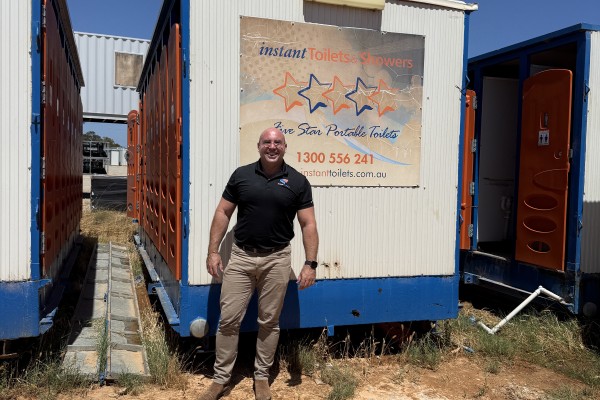
Instant Products Group has introduced a recycling and reuse program for its disused portable toilet facilities, diverting tonnes of material from landfill and supporting its broader sustainability strategy.
The initiative focuses on larger multi-cubicle hire units, some with up to 16 cubicles, which Instant Products Group managing director Scott Rawson says often have limited resale value once they reach the end of their hire life.
“There are a range of sectors that can and do purchase single-cubicle facilities when they’re no longer needed in our hire fleet. But the larger facilities are so niche, once they’re superseded or no longer being hired out, there’s simply no further use for them,” he says.
“We had to make a decision as a company what to do, that wasn’t just a complete demolition that saw everything go to landfill.”
Instead, the company now strips disused units for reusable components such as handbasins, tapware, electrical fittings and toilet parts, while sending steel and copper materials for scrap metal recycling.
“We’re also stripping out the copper from the electrical wiring and along with the steel structure, sending these to scrap metal recycling. These are large facilities, with the framework of each one containing around five tonnes of steel. That’s a significant amount of metal to be recycling,” Scott says.
While recycling delivers some cost efficiencies, Scott says environmental considerations were the primary driver: “Scrap metal recycling and reusing various components does create some cost efficiencies, but the key reason behind the decision was to align with our broader environmental strategy, which is to introduce sustainability measures where we can.”
Instant Products Group has also implemented other sustainability initiatives, including rainwater harvesting, low-flush toilets, solar-powered facilities and environmental rehabilitation projects.
“We want to always be moving in the right direction in terms of sustainability and sometimes that means considering an option we haven’t taken before. It’s also a reminder to other businesses that there is likely an opportunity to re-use or recycle within their own sectors – even if it means thinking about things a little differently,” Scott says.